


Editor's Choice


The opportunity and impact of MEPS electric motor regulations

Third Quarter 2025 Editor's Choice Electrical switching & drive systems & components

South African companies are gearing up for the new Minimum Energy Performance Standards (MEPS), part of a global trend towards energy-efficient electric motors. The process was started in June 2005, with the regulation requiring most three-phase, low-voltage electric motors in South Africa to eventually switch to IE3 (International Efficiency) motors, which are more efficient than IE1 and IE2-rated motors.
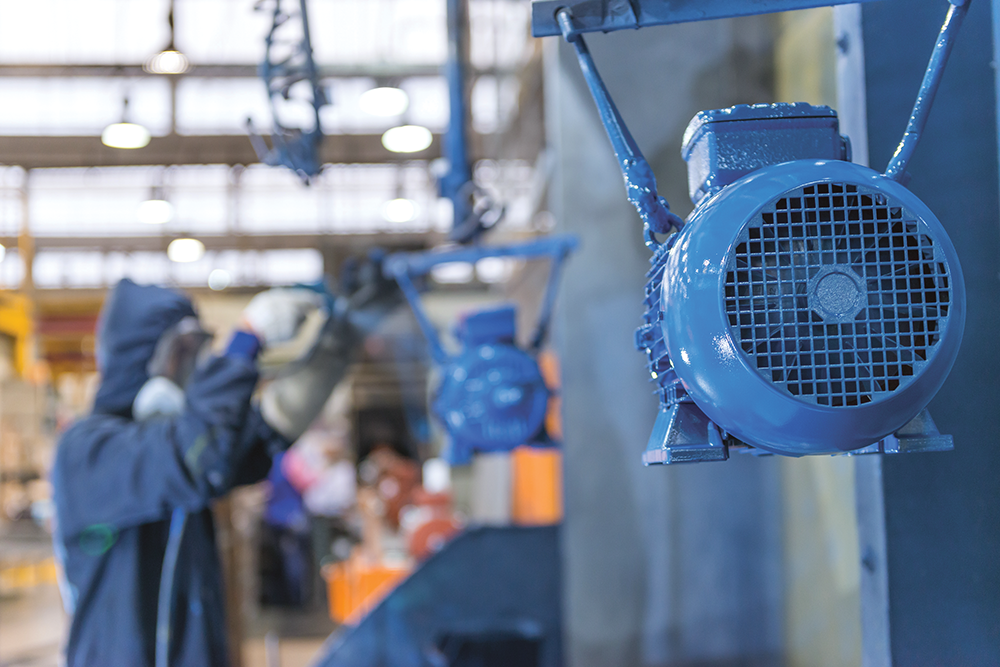
This switch brings efficiency and cost benefits to businesses, suppliers and original equipment manufacturers. Leading industrial and energy component manufacturer, WEG Africa, recently hosted a media briefing at its training centre in Johannesburg to unpack the motivations, benefits and requirements for MEPS.

A financial win for businesses

According to the International Energy Agency (IEA), electric motor-driven systems consume more than 40% of global electricity, which new regulations can reduce by at least 5%. Electric motors can consume energy equivalent to their acquisition costs in the first few weeks of operation.

The difference in energy efficiency between IE1 and IE3 motors is 4 to 8%. When comparing cumulative running costs, IE3 savings typically return investments within one to five years. Premium IE3 motors that run continuously can recoup their costs in months. IE3 motors also radically improve a company’s environmental impact and market competitiveness, as well as offset rising energy costs.

Exceptions and responsibilities

The new IE3 efficiency standard, officially the Compulsory Specification VC 9113, has been mandatory since June this year. The specification applies to a broad range of three-phase, low-voltage electric motors, specifically motors with two, four, six or eight poles with a rated power output ranging from 0,75 to 375 kW. It includes motors with non-standard mechanical dimensions and geared motors. It excludes certain categories, such as single-speed motors with ten or more poles, multi-speed motors, motors that use mechanical commutators and motors designed to operate entirely while immersed in a liquid.

Businesses can continue to run operational IE1 and IE2 motors, replacing these upon failure. Existing IE1 and IE2 motor stock can still be sold until May 2026. WEG Africa has already established local IE3 motor assembly lines.

In most cases, OEMs and equipment suppliers must certify their motors. End-user businesses can request to see a supplier’s letter of authority for the motors, issued by the National Regulator for Compulsory Specifications (NRCS).

Steps to align with the MEPS transition

The affected category of motors is very common and includes industrial applications, mining, agriculture, cold chain systems and HVAC units. The MEPS transition will impact many different businesses.

Here are some steps to prepare for the transition and gain its benefits:

• Conduct a thorough electric motor inventory audit to identify accurately all motors that fall within the scope of the MEPS regulations.

• Talk to equipment suppliers to understand the impact on equipment used in operations and how the supplier will address MEPS requirements.

• Develop a comprehensive, long-term strategy for replacing older motors, prioritising those that operate for extended periods to maximise potential energy savings.

• Update procurement policies and technical specifications to mandate explicitly that all applicable new electric motor purchases must meet the IE3 efficiency.

• Train relevant staff members (including procurement, maintenance and operations) on the new MEPS regulations and compliance.

• Undertake a cost-benefit analysis for replacing older, less efficient motors even before they fail, taking into account the potential for significant energy savings and the projected increases in the cost of electricity.

Equipment suppliers and end-user businesses can also engage with WEG Africa to learn more about the new standard.


Credit(s)


Share this article:
Share via emailShare via LinkedInPrint this page

Further reading:

PC-based control for additive machine tools
Beckhoff Automation Editor's Choice Electrical switching & drive systems & components
IRPD is a specialist in additive machine tools. Development is heavily focused on high system throughput and consistently high process quality. This goal was achieved with the help of PC- and EtherCAT-based control and drive technology from Beckhoff.

Read more...
A guide to common hydraulic system contaminants
CT Hydraulics (Nqoba) Editor's Choice Hydraulic systems & components
Every engineer, machine designer and maintenance professional understands that the heart of any reliable hydraulic system is its fluid. But the moment that fluid is compromised, your system’s life expectancy and your peace of mind drop dramatically.

Read more...
Compressed air piping design
Artic Driers International Editor's Choice Pneumatic systems & components
When designing a compressed air pipeline, remember that size matters. The internal size of the pipe, along with the pressure and air volume, determine the velocity of the compressed air in the pipeline.

Read more...
Top questions about pressure gauges
SA Gauge Editor's Choice Pneumatic systems & components
Some questions never go out of date, and in our industry, a few have been asked for decades. At SA Gauge, we hear them every week. Here are the ten questions we hear most often, and the practical answers that can save time, money and frustration.

Read more...
A technological leap with the proportional valve terminal
Festo South Africa Editor's Choice
Festo continually makes bold technological leaps to keep pace with global advancements. Controlled Pneumatics is redefining the boundaries of compressed air technology to meet the demands of today’s most advanced applications.

Read more...
PC-based control optimises robotic parts handling on plastics machinery
Beckhoff Automation Editor's Choice
NEO is a cartesian robot developed by INAUTOM Robótica in Portugal for parts removal on plastics machinery. Its aim is to increase system productivity. NAUTOM Robótica has entered into a strategic partnership with Bresimar Automação to increase the working speed of the cartesian robots using advanced control and motion solutions from Beckhoff. The result is a comprehensive, future-proof automation solution for its entire family of cartesian robots.

Read more...
Heavy impact, smart control
Axiom Hydraulics Editor's Choice Hydraulic systems & components
Every now and then a project lands on your desk that’s equal parts heavy machinery and fine control - a tantalising mix for any engineer. A client approached Axiom Hydraulics with a project exactly like this.

Read more...
Driving fluid power forward
Editor's Choice
The National Fluid Power Association is developing its latest Industrial Technology Roadmap for 2025, showing how hydraulics and pneumatics are changing to meet new industrial demands.

Read more...
World’s hottest engine
Editor's Choice Electrical switching & drive systems & components
Scientists have built the world’s smallest engine. It’s also the world’s hottest. It could provide an unparalleled understanding of the laws of thermodynamics on a small scale, and provide the foundation for a new, efficient way to compute how proteins fold.

Read more...
Reinventing the wheel
Editor's Choice Electrical switching & drive systems & components
Once a curiosity in the early automotive age, in-wheel motors are now re-emerging with real promise. From electric cars to commercial vehicles and even aircraft, they are on the verge of transforming transportation engineering.

Read more...


While every effort has been made to ensure the accuracy of the information contained herein, the publisher and its agents cannot be held responsible for any errors contained, or any loss incurred as a result. Articles published do not necessarily reflect the views of the publishers. The editor reserves the right to alter or cut copy. Articles submitted are deemed to have been cleared for publication. Advertisements and company contact details are published as provided by the advertiser. Technews Publishing (Pty) Ltd cannot be held responsible for the accuracy or veracity of supplied material.


© Technews Publishing (Pty) Ltd | All Rights Reserved